
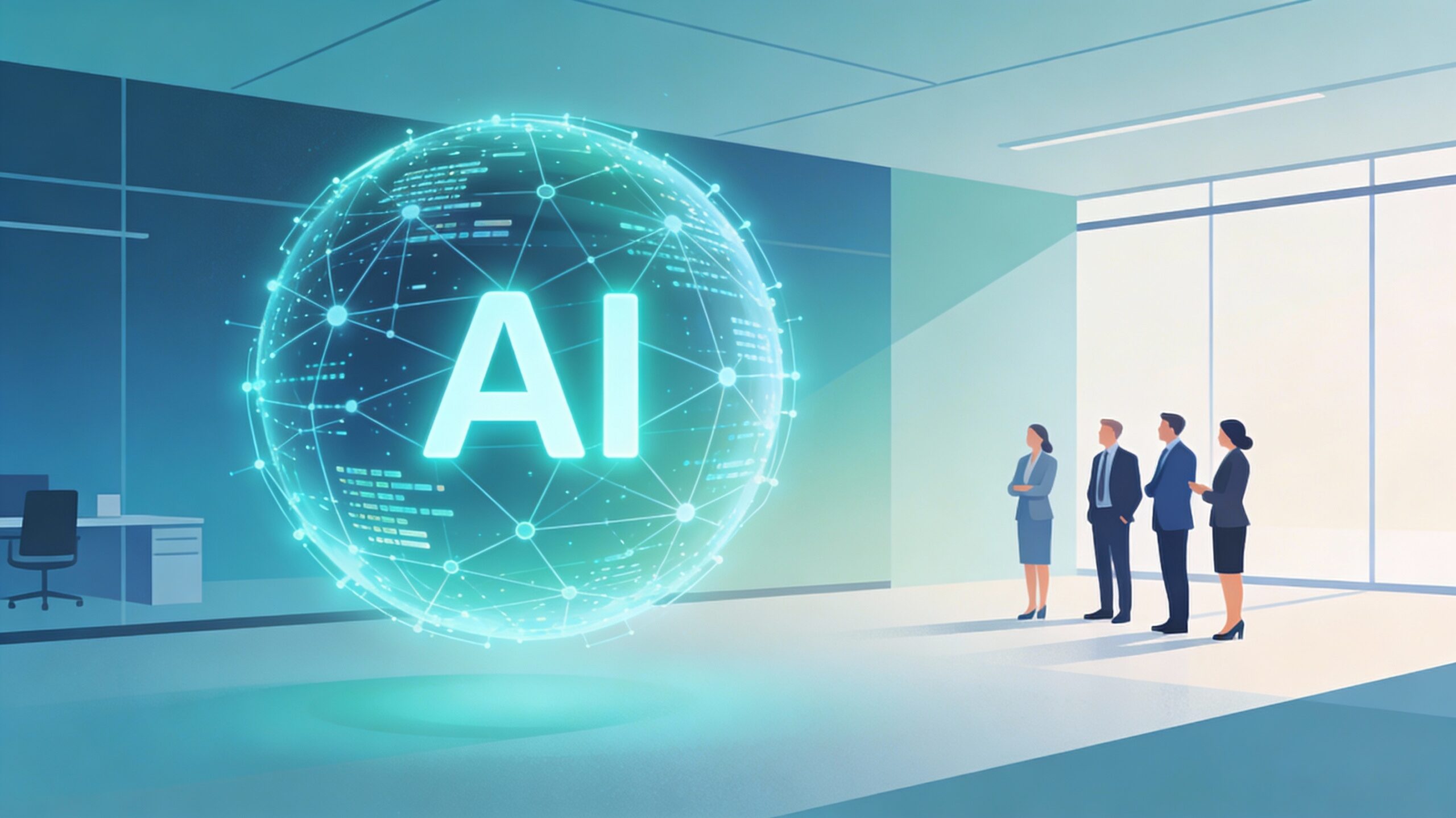
Integrated ISO audits were designed to reduce duplication, but in many organizations they still feel like three or four separate audits squeezed into one window. AI offers a way to tackle that problem at the root by handling the heavy lifting of data collection, pattern recognition, and repeatable checks, so auditors can focus on judgment rather than admin. When applied thoughtfully, AI in ISO audits improves audit efficiency, supports better decisions, and helps teams manage increasingly complex audit scopes without burning out their people.
What Integrated ISO Audits Really Mean?
In practical terms, integrated ISO audits bring together multiple ISO management systems. Most often ISO 9001, ISO 14001, ISO 27001, and ISO 45001 into one coordinated cycle instead of a series of siloed assessments. The goal is to use one set of processes, controls, and records wherever possible. Then test them once against all relevant standard despite three or four times with slightly different checklists.
This sounds simple, but it creates complexity in the background: overlapping clauses, different risk perspectives, and a huge increase in data volume. AI audit support tools are particularly effective here because they can map shared controls across standards, highlight where requirements genuinely diverge, and reduce the manual effort involved in reconciling all of that information.
Where AI fits in the ISO Audit Lifecycle
AI is not a separate step in the audit. In spite it slots into the work auditors already do across planning, fieldwork, reporting, and follow‑up. AI‑powered auditing platforms can analyse operational data to propose risk‑based priorities, generate draft integrated audit plans, and maintain a single view of requirements across all relevant ISO standards. During fieldwork, the same platforms can automate sampling, cross‑check evidence against multiple clauses, and surface anomalies that warrant human investigation.
The most mature implementations go a step further and connect to live systems through APIs, enabling near real‑time monitoring of key indicators such as incident rates, access violations, or process deviations. That shift from static snapshots to dynamic monitoring is one of the clearest ways AI in ISO audits changes how integrated ISO audits feel day to day.
Using AI to Streamline Evidence and Documentation
For most teams, the pain starts with evidence similar to policies, logs, training records, maintenance reports, supplier files, risk registers, incident forms, and more. AI‑powered document analysis tools can read through this material at scale, classify it by topic, and tag it against relevant ISO clauses in a centralized repository. In an integrated audit, that means one training report can be linked to quality, safety, and information security requirements at the same time, instead of being copied into three separate audit folders.
Natural language processing helps here by identifying which sections of a document address specific control objectives, even when the wording does not match the standard verbatim. For the audit team, this reduces hunting time, cuts duplicate uploads, and strengthens ISO compliance by making it easier to prove that the organization’s documentation actually supports its stated controls.
AI for Risk-Based Auditing and Smarter Sampling
Risk‑based auditing is not new, but AI changes how quickly and how deeply those risks can be analysed. Machine learning models can review historical nonconformities, incident trends, customer complaints, and process KPIs to flag processes, locations, or suppliers that are statistically more likely to generate issues. Instead of relying solely on expert judgement, auditors get a data‑driven view of where to spend limited time within an integrated audit scope.

Sampling is another area where AI audit support can make a noticeable difference. AI engines can define and select samples based on real distribution patterns, seasonality, and past failure rates, not just simple random selection. The result is a more defensible risk‑based auditing approach that aligns neatly with ISO guidance on focusing audit effort where the risk of non‑conformity or impact is highest.
Continuous ISO Compliance from Point‑in‑time to Always‑on
Traditional ISO audits provide assurance at a point in time because everything builds to an annual or triennial visit. AI enabled monitoring tools help organizations move toward continuous ISO compliance by tracking critical metrics and controls throughout the year. When a threshold is breached such as a spike in defects, repeated access control failures, or an environmental emission anomaly, the system can raise alerts, log evidence, and even trigger predefined workflows for investigation and corrective action.
And for integrated ISO audits, this continuous monitoring is exclusively valuable because many of the same data streams support multiple standards. A safety incident, for example, might trigger ISO 45001 considerations but also raise ISO 9001 and ISO 14001 questions around process control and environmental impact. AI‑powered auditing platforms help connect those dots automatically, ensuring that follow‑up activity supports the full management system, not just a single standard in isolation.
Strengthening ISO Management Systems with AI Insights
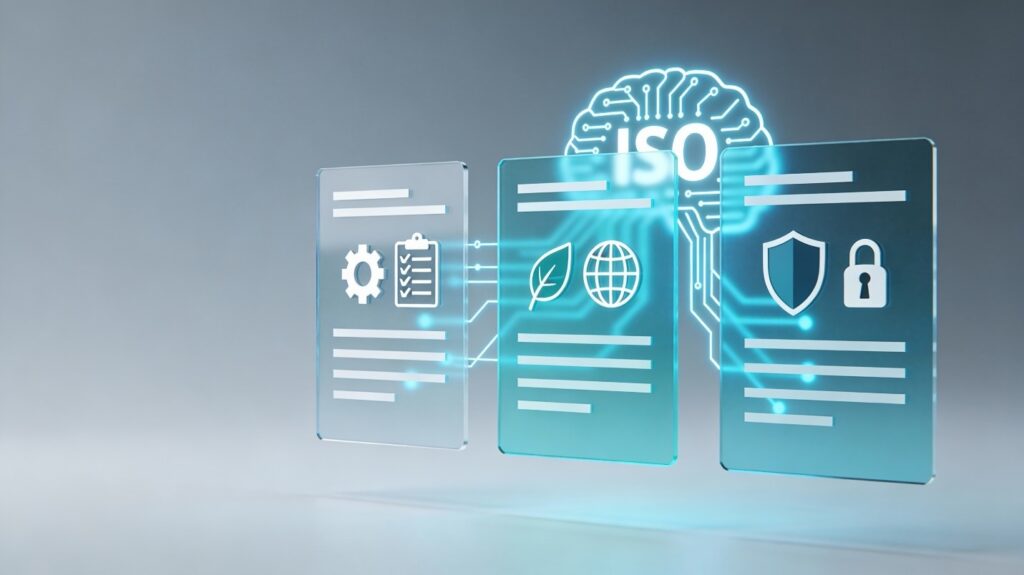
Beyond individual audits, AI can support the ongoing maturity of ISO management systems by uncovering patterns that are hard to spot manually. Trend analysis across audits, regions, and business units can reveal systemic weaknesses such as training gaps, supplier performance issues, or recurring control design flaws that contribute to non‑conformities across multiple standards. Those insights feed directly into management review, risk registers, and improvement plans, making the entire ISO framework more responsive and data‑driven.
Because AI tools can break down results by process, location, or control owner, they also make it easier to demonstrate the effectiveness of improvements over time. This supports the continual improvement expectation built into ISO management system standards and gives leadership a clearer view of how investment in AI audit support translates into fewer surprises and more stable performance.
Governance, Ethics, and Staying Audit‑ready with AI
Introducing AI into ISO audits does more than add efficiency; it introduces new responsibilities. Organizations need clear governance around how AI systems are configured, which data they use, how outputs are validated, and where human oversight sits in the final decision chain. Emerging standards such as ISO/IEC 42001 and related AI guidance emphasize transparency, explainability, and appropriate controls around AI use expect external auditors to ask how these elements are handled.
Documenting this governance is just as important as designing it. Audit teams should be able to show how AI tools are tested, how bias is checked, and how exceptions are handled when models make incorrect or incomplete recommendations. Treat AI as an assistant that supports professional judgement, not a replacement for it; this mindset aligns well with both ISO expectations and new regulatory frameworks that require clear human accountability in AI‑supported processes.
Practical Steps to Introduce AI into Integrated Audits
Two focused lists are often enough to move from idea to action without overwhelming the team. The following steps are designed to help organizations pilot AI in ISO audits in a controlled, pragmatic way.
- Start with one high‑volume, low‑complexity area (for example, document classification or log analysis) where AI‑powered auditing can save time without affecting final certification decisions.
- Consolidate audit and compliance data into a central repository so AI tools can work across all integrated standards instead of being confined to separate silos.
Once a pilot is running, the next challenge is to scale AI audit support carefully without losing visibility or control. The priorities below help keep that expansion grounded in real value rather than novelty.
- Define measurable outcomes akin to reduced audit cycle time, fewer manual samples, or faster closure of non‑conformities and review them regularly with stakeholders.
- Build AI considerations into existing ISO audit procedures and ISO management system documentation so that methods, roles, and responsibilities stay clear as adoption grows.
Taken together, these practices allow integrated ISO audits to benefit from AI’s strengths speed, pattern recognition, and scale. While preserving the professional scepticism, context, and ethics that human auditors bring to every engagement.