Leadership conversations across North Tarrant County have grown quieter, not because decisions have become simpler, but because many leaders are unsure how much of their judgment should be handed over to artificial intelligence. AI sits open on screens in offices every day, yet something feels off. The output is clean, efficient, and fast, but it rarely reflects the way experienced leaders actually think, weigh risk, or guide teams.
This tension surfaced repeatedly in private conversations with executives long before it appeared in public workshops. Leaders were not questioning whether AI belonged in their organizations. They were questioning whether it could ever sound like them.
That question became the foundation of Mental Forge’s work in North Richland Hills and the surrounding Tarrant County business community.
The Unspoken AI Identity Gap
AI does exactly what it is instructed to do. When leadership communication lacks structure, clarity, or intent, AI reflects that back in polished language that feels disconnected from reality. Over time, this creates a subtle but costly gap, leaders begin adjusting their thinking to fit the tool instead of training the tool to support their leadership.
This is where many organizations stall. AI adoption continues, but confidence quietly erodes. Strategy documents feel generic. Client communication loses its edge. Internal alignment weakens. The issue is not the technology itself. It is the absence of leadership translation.
A Practical Test With the NET Chamber of Commerce
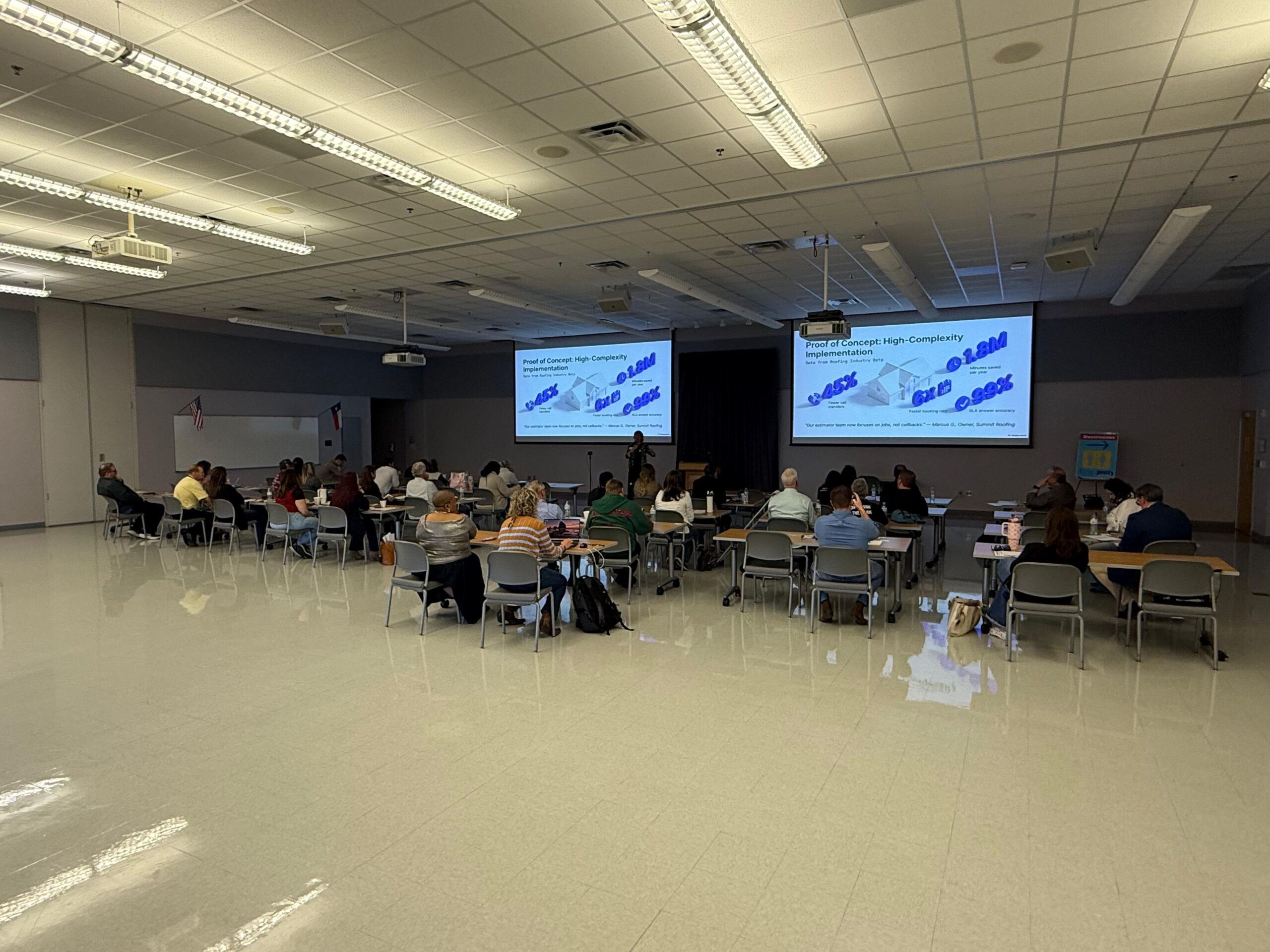
On February 6, Mental Forge partnered with the NET Chamber of Commerce to bring this challenge into the open during the Q1 Business Workshop, Integrating AI into Your Business Plan. Hosted at the Birdville Center of Technology and Advanced Learning in North Richland Hills, the session was designed for business owners and senior leaders who wanted clarity rather than hype.
The room represented a cross-section of North Tarrant leadership, operators, founders, financial decision-makers, and department heads. Every attendee shared a similar experience. AI was already in use, but its value felt uneven and difficult to trust.
Rather than introducing tools or prompt templates, the workshop focused on how leaders communicate when outcomes matter. The session reframed AI as something closer to an executive assistant than a productivity shortcut. Once that shift occurred, the conversation changed.
Three Leadership Foundations That Shifted Perspective
The workshop brought together three complementary viewpoints that grounded AI use in leadership reality.
Steve Steele opened the session by addressing communication fundamentals rooted in leadership presence. His focus was not persuasion, but clarity. Leaders who struggle to communicate direction internally often face the same friction with AI systems. When tone, pacing, and intent are unclear, both people and technology respond inconsistently.
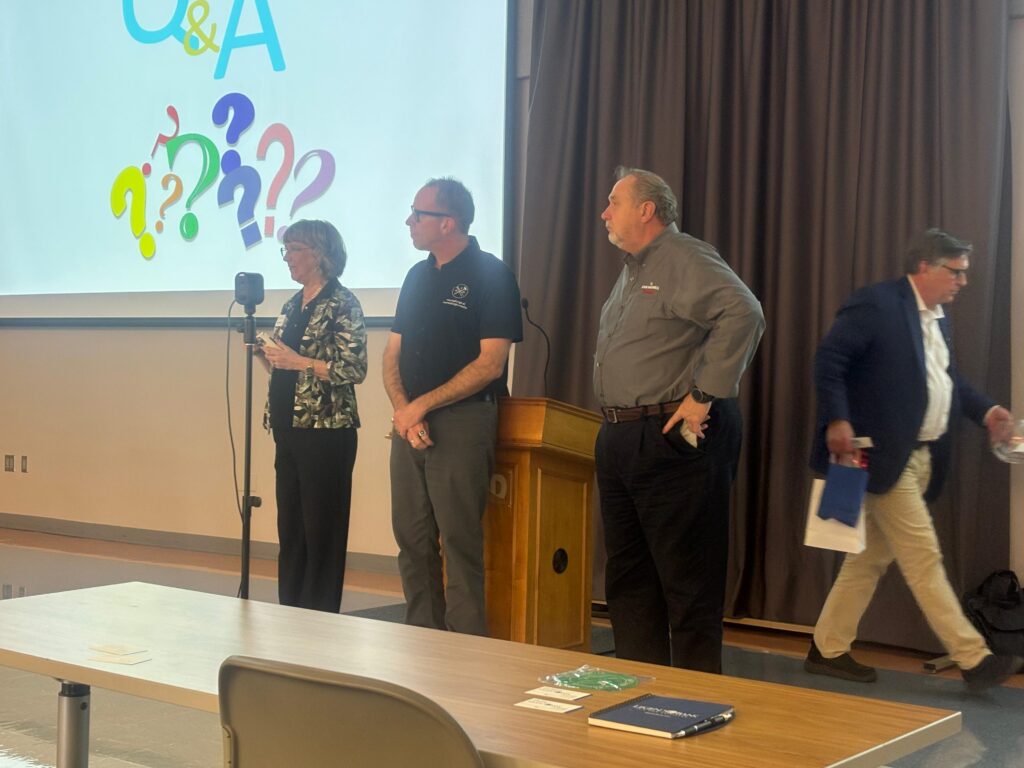
James Hammer followed by introducing the concept of AI paralanguage, the signals embedded in structure, context, and instruction that shape how AI interprets direction. Participants learned how to guide AI the same way they would guide a senior team member, through context-setting, iteration, and expectation alignment. This approach replaced guesswork with consistency.
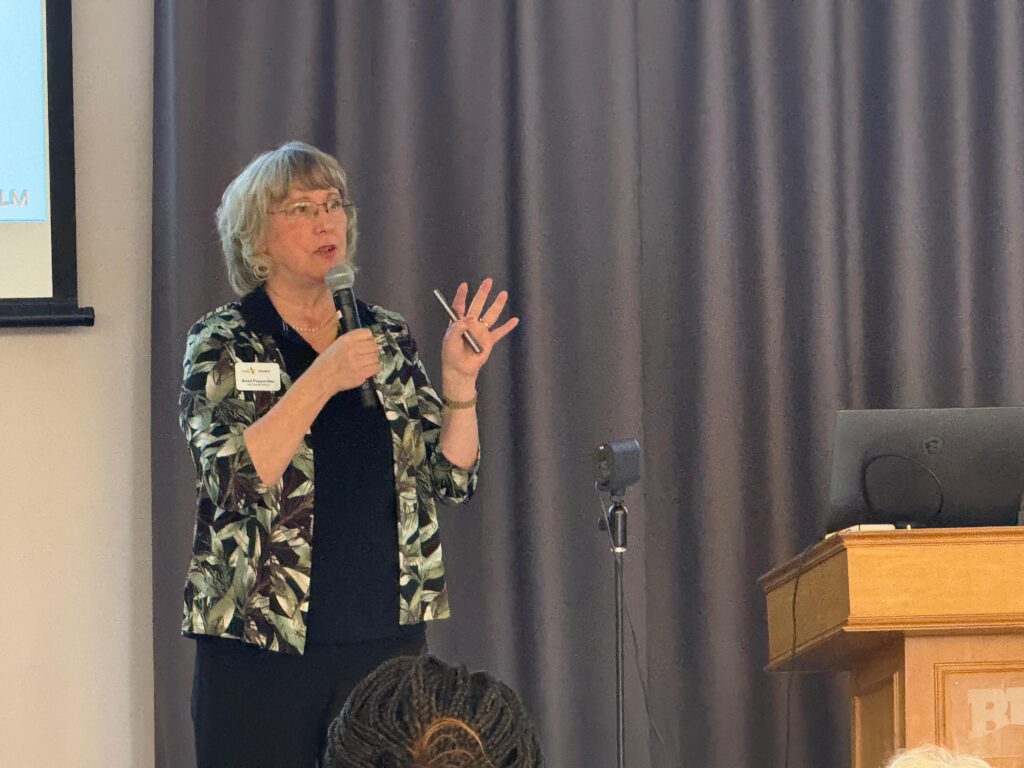
Kristi Pepperdine grounded the discussion in operational and financial impact. Her session challenged the idea that AI should increase volume. Instead, she showed how structured AI integration reduces avoidable errors, protects cash flow, and frees leadership capacity for higher-value decisions. The emphasis stayed on discipline, not speed.
From Workshop Insight to Deeper Application
As the session concluded, one message surfaced repeatedly. The framework made sense, but leaders needed time and structure to apply it. A two-hour workshop created awareness. Implementation required depth.
That feedback directly shaped the creation of Speak to Lead, a full-scale AI leadership intensive designed for executives who want AI systems that reflect their thinking, standards, and decision-making style.
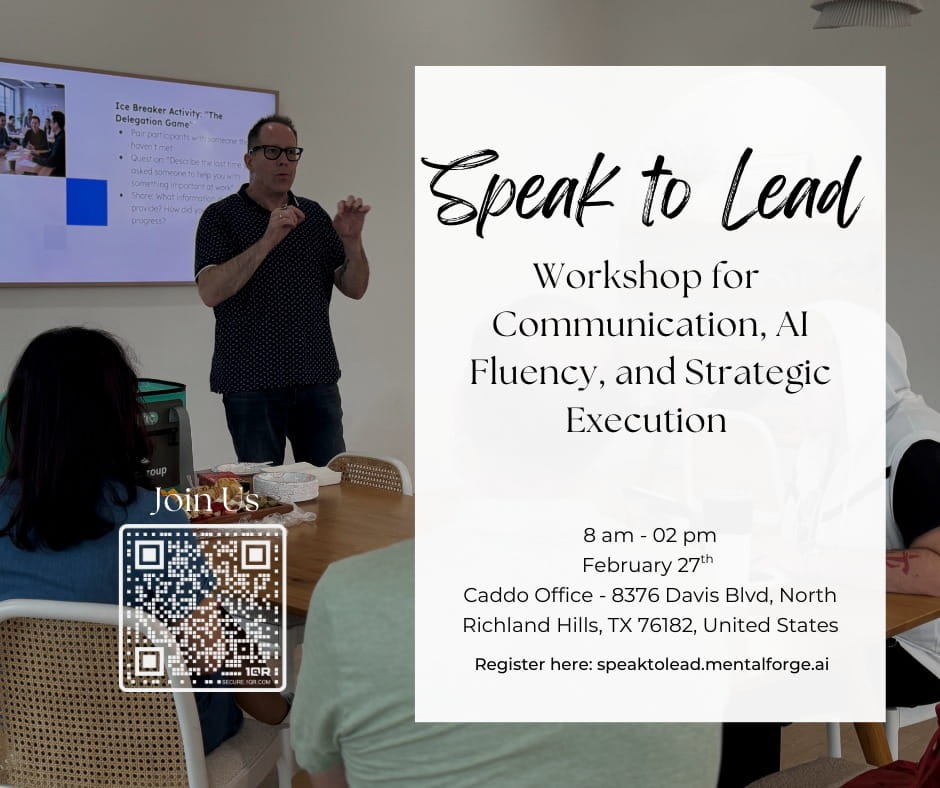
The Speak to Lead AI workshop will take place on February 27, 2026, at Caddo Office Reimagined. The session expands the NET Chamber's foundations into a hands-on environment where leaders actively build communication systems rather than observe demonstrations.
What Participants Will Walk Away With
Speak to Lead is structured as a working session. Attendees develop practical frameworks they can immediately apply across teams and workflows. The focus stays on alignment rather than automation.
Participants will leave with a defined AI communication playbook, clear role-based AI applications tied to real operational needs, and direct feedback on leadership-specific use cases. The goal is consistency, clarity, and trust, not novelty.
Why This Matters for North Tarrant Leadership?
AI adoption will continue across every industry. What remains undecided is whether leadership voice will survive the transition intact. The NET Chamber workshop confirmed that when leaders stop reshaping themselves around AI and instead train AI to reflect how they lead, results stabilize.
Communication improves. Teams regain alignment. Decision-making feels grounded again.
The February 27 Speak to Lead AI workshop builds on that momentum. It offers leaders a structured path to integrate AI without losing judgment, identity, or control.
Register for Speak to Lead – February 27, 2026.