
Small businesses often look at AI integration and think, “That’s for the big guys.” The ones with full IT teams, deep pockets, and elaborate systems. But in reality, plenty of smaller operations, whether a local shop, a home-based service, or a tiny consulting team are already experimenting with AI integration in small, practical ways. They don’t need a data department or months of training. Starting with a simple plan, a clear approach, and just enough guidance suddenly makes the whole idea feel doable, even manageable.
Still, it’s natural for owners to hesitate. Questions pop up: How much will AI integration cost? Will it slow everything down? Can my team actually keep up? Most are not looking for technical manuals or complex jargon. Nevertheless, they need solutions and tools that actually help with the tasks they deal with every day. When they see a path forward that is practical and focused on real results, people relax. They start experimenting. They gain confidence. And before long, that confidence becomes the backbone for using AI integration effectively, without needing to be a “tech person.”
Understanding Why Small Businesses Need a Clear, Simple Starting Point
For many small businesses, every day is already packed. There isn’t much room for long training programs or tools that take weeks to learn. AI integration works best when it fits into that reality instead of creating more stress. Beginning with something simple, something that makes sense right away, is often all it takes to get teams moving. Once owners and employees see that AI can help with the tasks they already handle, it stops feeling like a foreign concept.
The first step is usually spotting the small parts of the business where tiny changes can make a real difference. These often show up in the daily grind and then keeping up with emails, scheduling, jotting down notes, managing customer messages, or repetitive admin work. When teams notice that AI integration actually saves them time or reduces errors, the hesitation fades. The tools go from being a “tech problem” to a helpful teammate that makes work easier.
That early success is important. It changes how people think about AI integration and builds the confidence they need to try more. Teams don’t feel forced into complicated systems or expensive setups. Instead, with the right guidance and a structure that fits the size and needs of the business, even small teams can start seeing meaningful benefits almost immediately.
How a Practical AI Integration Framework Helps Teams Move Forward

A practical framework prevents confusion. It shows employees the steps, the purpose behind each step, and the outcomes they can expect. This approach works well when the process remains direct and avoids overwhelming detail. Small teams appreciate a structure that honors their time and speaks in language they already understand.
The early phase usually includes short demonstrations, guided exploration, and examples drawn from real workplace situations. These demonstrations help employees understand how AI tools interact with their current responsibilities. It also gives them the chance to ask questions and remove uncertainty at the start.
A successful SMB AI strategy depends on steady exposure rather than pressure. When employees explore tools at a manageable pace, they gain more clarity. They begin to notice patterns in their workflow where AI can assist. These discoveries happen naturally because the learning environment invites experimentation without risk.
Key Areas Where Small Businesses Notice Immediate Results
Small businesses adopt tools faster when they see quick wins. These wins usually appear in areas with repeat routines. Many organizations observe early improvements when they focus on communication, planning, and operational detail.
The most common early results include:
- More accurate and consistent written communication for internal and external needs
- Faster organization of scattered information into clear summaries
- Stronger preparation for client conversations, proposals, or internal updates
- Easier documentation that once consumed valuable time
These improvements matter. They influence overall momentum and help teams move through the learning curve faster. Employees feel more control over their responsibilities. Managers notice fewer delays, smoother coordination, and clearer communication across different roles.
Small businesses that follow this path understand that the goal is not to overhaul their systems. The goal is to enhance workflow speed and reduce friction in areas that already demand significant attention.
A Guided Approach Helps Non-Technical Teams Stay Aligned
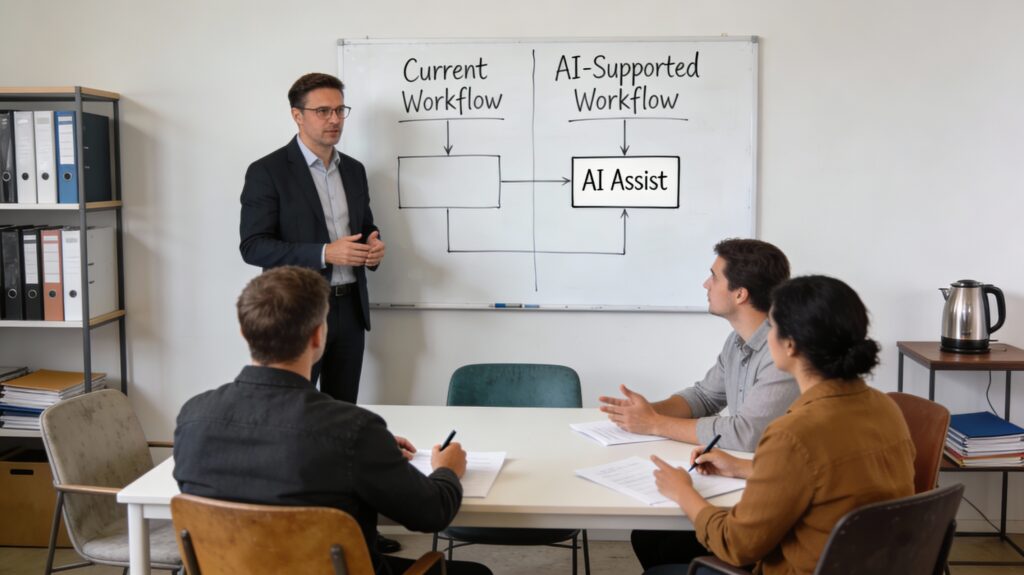
Non-technical AI adoption works best with steady, guided support. A structured process removes the burden of figuring everything out alone. It provides enough direction for employees while allowing them room to apply the knowledge in their own way. When guidance comes from someone with real understanding of small business operations, teams learn through context they recognize.
A guided approach often includes:
- Short learning segments that fit between daily responsibilities
- Hands-on practice that connects tools to real workplace needs
- Step-by-step explanations that build clarity without technical language
This method builds trust. Employees know they have space to explore, ask questions, and refine their understanding. Once they recognize how AI raises the quality of their output, their willingness to expand increases. That expansion supports long-term growth because teams continue to build skills at a steady pace.
Why a Clear AI Integration Strategy Matters for SMB Growth?
A strong SMB AI strategy removes guesswork. It gives leadership and employees a shared direction. Everyone understands why the organization is moving in this direction and how the tools fit into their routines. Small businesses gain structure, predictability, and a sense of progress that carries into future decisions.
This clarity matters for another reason. Small businesses often rely on close collaboration between roles. When an organization works with a tight team, any confusion affects the entire operation. A clear strategy prevents those disruptions. Employees remain aligned. They adopt tools with a shared mindset. They understand how each step contributes to the organization’s goals.
A well-planned strategy also reduces the noise around AI. Many small teams feel overwhelmed by rapid changes in technology. A structured plan removes pressure. It focuses on what matters today and guides the organization toward steady improvement without unnecessary complexity.
Choosing Tools That Support Growth Without Technical Barriers

Small businesses benefit most from tools that solve visible needs. They do not require advanced systems or deep technical configuration. They need tools that support communication, planning, and decision clarity. These tools deliver impact when they remain easy to use and intuitive for non-technical employees.
The right selection process often starts with identifying tasks that absorb time and energy. Once these tasks become clear, small teams can choose tools that reduce effort and improve consistency. Many organizations discover that the best tools are those that integrate quickly with their daily workflow and support incremental progress.
Practical AI integration does not rely on big platforms or expensive deployments. It relies on understanding the organization’s rhythm. It respects how people work and introduces tools that align with those patterns. When the process stays simple, adoption becomes much easier.
How Internal Culture Strengthens During AI Integration
Culture plays a quiet but important role. When employees begin to understand AI through practical exposure, communication improves. Teams share discoveries, compare ideas, and refine workflows together. These exchanges strengthen relationships. They also create a supportive environment where employees feel comfortable improving their skills.
This creates momentum. Small achievements lead to larger conversations about how to refine workflows and improve operational clarity. Leaders observe a more confident team. Unexpected ideas surface. Employees feel ready to handle new responsibilities. This cultural improvement becomes a major advantage because it influences morale and long-term performance.
Organizations that want additional structure often explore external support. A natural option for small teams includes AI Integration Consulting by Mental Forge, where the guidance focuses on simple systems, practical workflows, and results that small teams can maintain over time.
Teams that want to understand what practical, workshop-style learning looks like in action can review: How Texas Teams Are Learning AI Faster Through Practical, Real-World Training, which walks through real examples of role-based exercises and workflow-focused sessions.
A Strong Start Builds the Foundation for Future Growth
Small businesses that begin AI integration with a clear, steady approach move through the learning cycle faster. They avoid frustration, confusion, and guesswork. Employees gain confidence. Leaders gain visibility. Workflows run with greater consistency. Over time, the organization builds a foundation that supports future digital decisions with ease.
AI integration becomes a natural part of how the team operates. The systems adapt to their rhythm rather than the other way around. With the right structure, small businesses discover that non-technical AI adoption can be smooth, meaningful, and deeply valuable. A strong beginning sets them on a path that supports sustainable growth for years to come.